The World Nomads website is temporarily unavailable while we complete system changes as part of the global sale of World Nomads to its new owner, IMG. IMG is working hard behind the scenes to reflect the change in ownership and ensure a smooth transition. Our technical teams are implementing these changes to ensure a seamless customer experience and expect the website to be available again within approximately 2 hours.
Thank you for your patience while we complete this work.
Rest assured, your insurance benefits, coverage, and plan terms will not change as a result of this transaction. Your existing claims, customer service inquiries, and plan servicing will continue without interruption.
If you require urgent assistance while our website is unavailable, our Emergency Assistance team is available 24/7. For all other enquiries, please contact our Customer Service team in your location here.
Is the travel company you're traveling with really looking after their porters? A former porter turned tour operator shares 6 things during your trip.
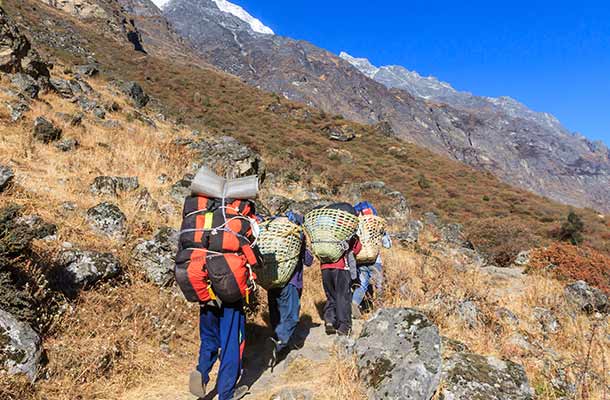 Photo © iStock/my_beloved
We've all heard the stories of porters left on the mountainside or freezing outside tents while travelers revel inside. But how can you as a traveler know that the company you travel with really is treating their porters fairly?
Beyond all the marketing hullabaloo, here are some tips from a former porter turned tour operator, Prem Khatry of Ace the Himalaya:
1. Insurance
Make sure your porters are insured well and covered for medical and rescue evacuation services.
2. Weight Limits
Be very sensitive about the weight limit for the porter i.e. 30kg/porter maximum. Average weight limit should be 25kg/porter. Many of the national and international companies force porters to carry more than 50 kg each.
3. Health and Well-Being
Make sure your porters are treated in a very friendly and hospitable manner. Make sure leaders never treat them as merely porters but also as good friends. Make sure your guide pays attention to the good health, food and sleep of every porter on the trip.
4. Education
Make sure your porters are educated on the environmental impact of your trip. They must have the first hand knowledge of waste management and know the role they play in making the trip as environmentally responsible as possible.
5. Appropriate Dress
Make sure they are equipped with warm clothes, good shoes and all the necessary equipment for high altitude trekking. They must be provided adequate shelter, food, drink and wages.
6. Inspiration
Most of the young porters are future guides and also part time students. Leaders must help and inspire the porters to grow as potential guides, all our trekking guides and myself started as a porter.
Related articles
Simple and flexible travel insurance
You can buy at home or while traveling, and claim online from anywhere in the world. With 150+ adventure activities covered and 24/7 emergency assistance.
Get a quote
No Comments